

Systemic lupus erythematosus (SLE) is a complex autoimmune disease where healthy cells from connective tissues are mistakenly attacked by a person’s own immune system. SLE is intriguing in that it can attack multiple organs and cause diverse symptoms that are unique in each patient diagnosed. However, since SLE is complex and causes total body symptoms with differing ranges in severity, it is hard for doctors to properly diagnose and potentially treat the disease. The Lupus Foundation of America estimates that there are around 161,000 to 1.5 million documented cases of SLE in the United States alone. This extreme range of documented cases further emphasizes lupus is not properly understood, not properly diagnosed, and lacks a general public understanding of this disease process and how it impacts people. However, celebrities like Selena Gomez who have SLE are openly talking about the disorder and foundations like the Lupus Foundation of America have orchestrated mass events to promote research and awareness. It is critical to develop a deeper understanding and promote research to allow for a proper diagnosis and treatment plan.
What is lupus?
Lupus occurs in patients with overactive immune systems. Lupus has many variations of the disease with the main one being systemic lupus erythematosus (SLE). SLE is the most commonly diagnosed form of lupus because of the number of symptoms associated with the disease. SLE also causes inflammation in organs like the kidneys. Lupus is not contagious and has been linked to both genetic and environmental factors. Lupus has active stages of the disease that are called “lupus flares” and phases of remission. These lupus flares cause the most damage to the body and are what cause symptoms in patients.
How does SLE impact the immune system?
Lupus itself impacts multiple parts of the immune system, including adaptive, complementary, and innate immune responses. Pathways in the immune system that are impaired are ones that control and regulate inflammatory responses like specific Toll-like receptors (proteins in the innate immune system) and cell death (apoptosis) pathways. Once damaged, these pathways cause major immune response reactions, most specifically an immune response called a type III hypersensitivity. This type of hypersensitivity results because of a buildup of antigen-antibody complexes that haven’t been properly destroyed. Phagocytes (cells that ingest harmful foreign particles) are recruited to try and break up this buildup but cannot properly destroy these complexes. Since these cells can’t break up the complexes, a vicious immune response occurs resulting in “lupus flare” ups.
What causes SLE and why is it so hard to diagnose?
SLE is multifaceted and doesn’t have one common risk factor. Research concludes that most patients develop lupus through genetic and environmental factors like having EBV (Epstein-Barr Virus) or being exposed to UV radiation (sun rays). Certain polymorphisms (difference in one amino acid within a gene sequence) like toll-like receptors 7 and 9 (TLR7 & TLR9), cause misregulation of inflammation and promote an inflammatory response. A pathway mutation that occurs is in the cell death pathway (cell apoptosis). In patients with lupus, their healthy cells aren’t killing overmatured B cells (a type of white blood cell that attacks foreign invaders or antigens) which eventually morph into autoantibodies, cells that can’t differentiate between healthy and foreign cells. Lupus requires certain “triggers” from both genetics and other factors that start the onset of the disease.
Lupus is hard to diagnose because each person with the disease is unique. It is often referred to as the “disease of 1000 faces” because each person has different symptoms and different exposures that can trigger symptoms. The combination of genetics, hormones, sex, and environment plays a crucial role in how the disease progresses in each patient and how symptoms are identified.
How is SLE diagnosed and treated?
The American College of Rheumatology uses a standard classification scheme to confirm a diagnosis. A person has to meet at least 4 out of the 11 criteria to obtain a lupus diagnosis. Some criteria include physical symptoms and internal inflammation. A person must have a positive auto-nucleic antibody (ANA) test, which tests for autoantibodies in the body. This ANA test confirms that there is some form of attack on healthy tissue. A doctor will also consider a family history of lupus and environmental triggers like having mono (EBV), radiation, or drugs that could induce symptoms.
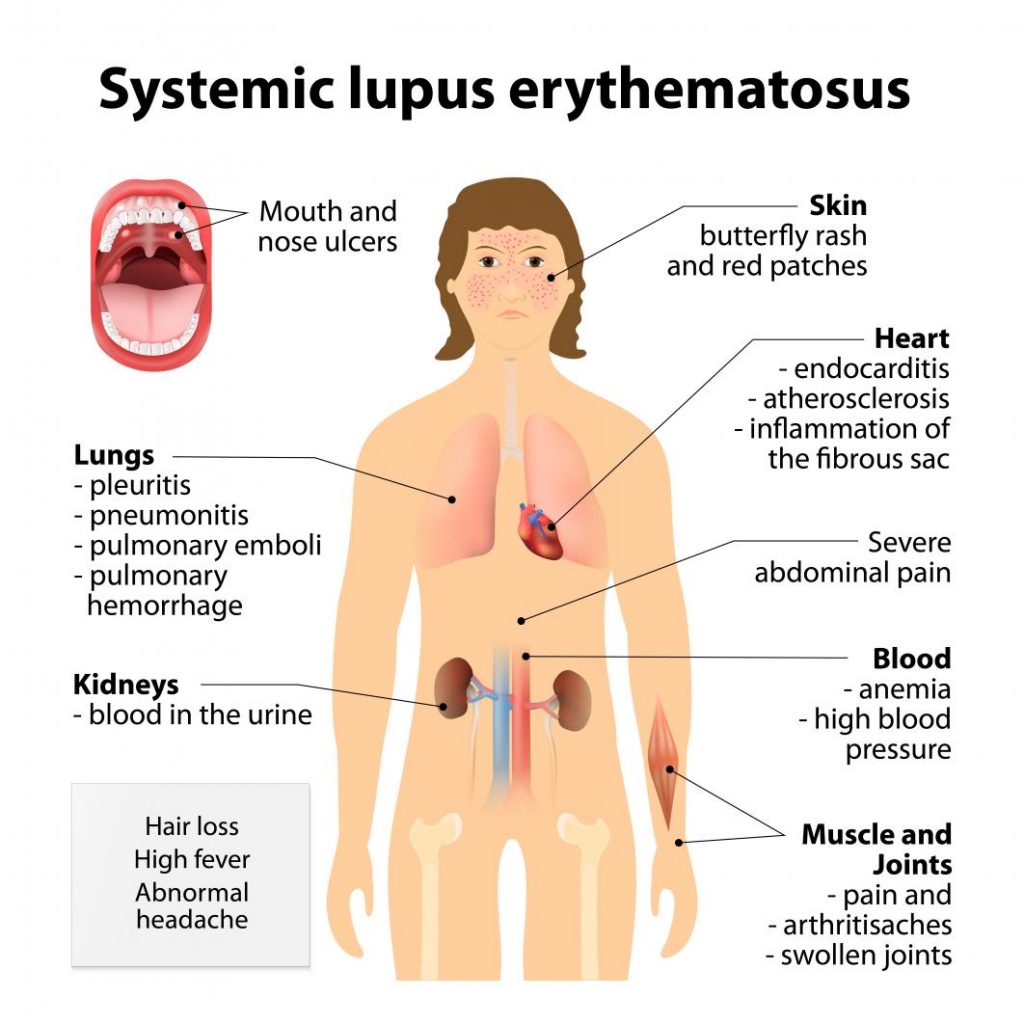
In terms of treatment of lupus, each case is individualized based on the symptoms and current organ damage. The main treatment aims are to prevent and manage flares and reduce the risk of organ damage. Medications like anti-inflammatories are used to reduce inflammation and in extreme cases, chemo may be used to put symptoms into remission. Research is still underway for better, healthier options to treat the disease; including creating new drugs that directly treat lupus and immunotherapy research.

For more information, please see the table of contents below for the different theme pages I have created on what SLE is.
Website Table of Contents
Start Here:
Individual Theme Pages:
