Reflection Blog 3:

As can be concluded from my posted pages and my general outline of what I wanted to study from reflection blog 2, I have decided to focus my research on Systemic Lupus Erythematosus. What really drew me to studying lupus is the fact that I am personally intrigued by this disease and that it is a disease of mystery. Lupus is so complex because it is multifaceted and unique to each individual; meaning, that each person diagnosed with the disease will have different symptoms and different exposures that trigger this disease. On top of this, lupus is hard to diagnose and often misdiagnosed and underrepresented in society. It is assumed that there are only 1 million cases in the United States alone; however, this number isn’t accurate because of lack of awareness about the disease and doctors not fully understanding lupus symptoms. There are a few main takeaways that I want to come from this experiment which can be broken down into the following Themes and innovations:

Themes:

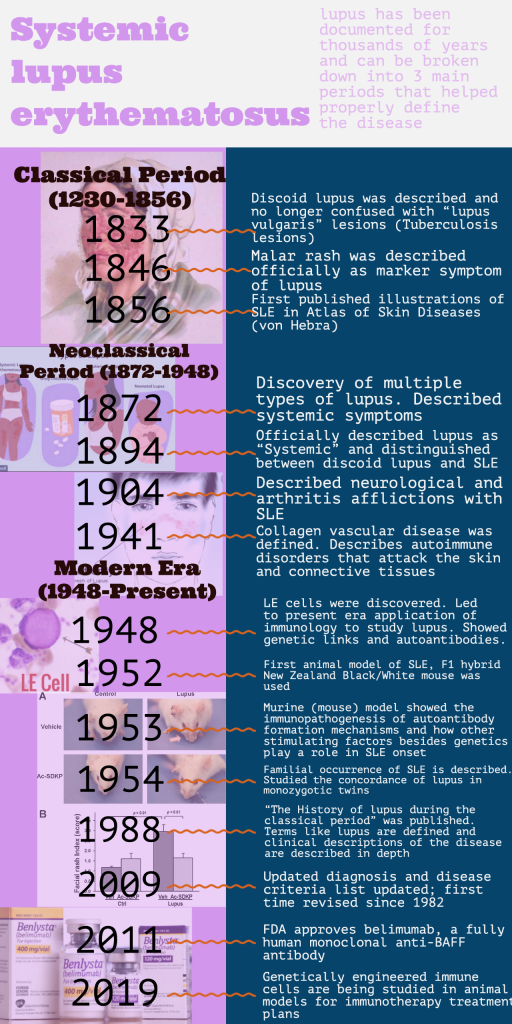
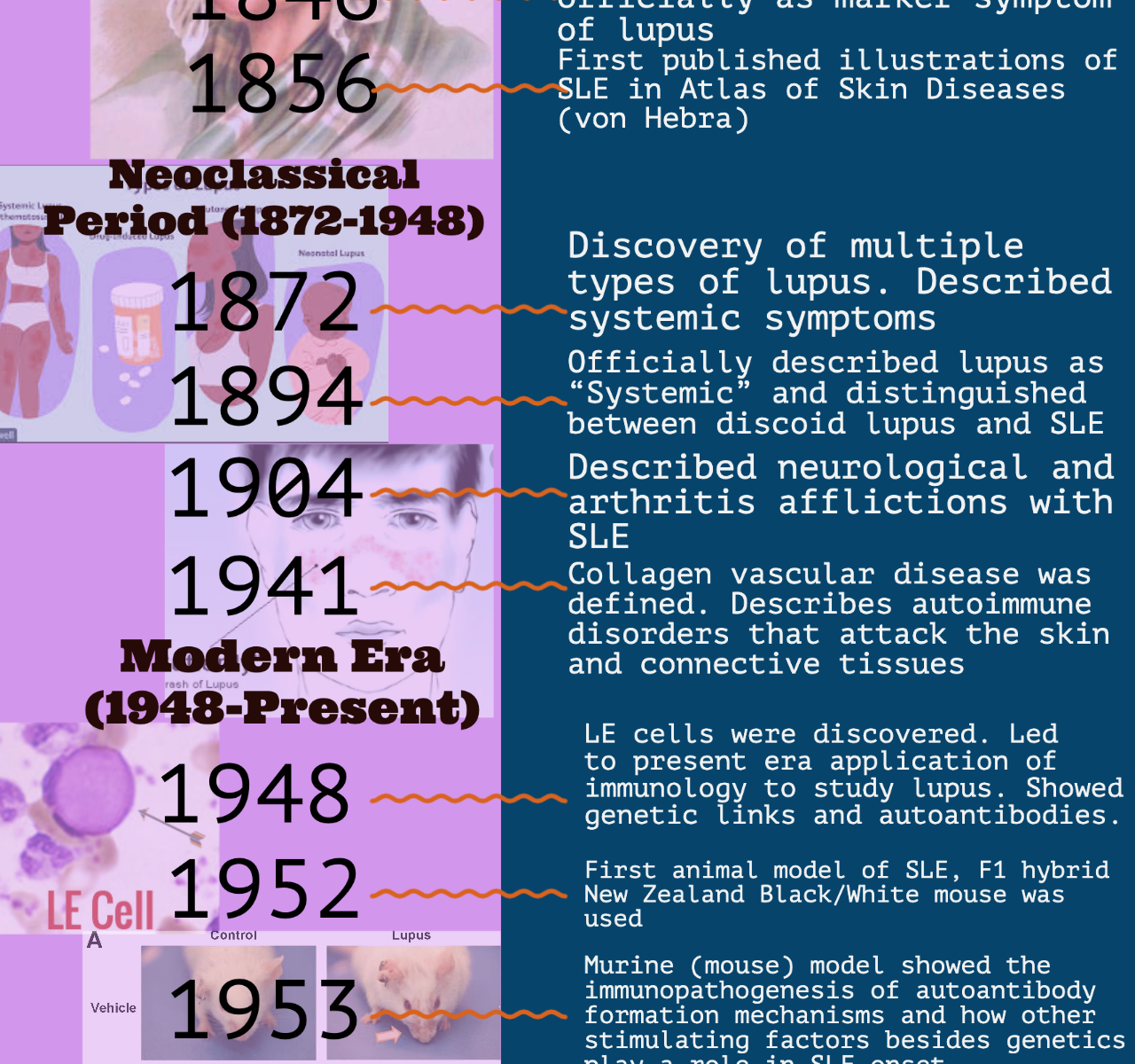
  • I firstly want to examine the history and diagnosis/treatment process of lupus. Lupus is an incredibly old disease, with cases first being documented by Hippocrates back in 400 BCE. However, while lupus has been in literature for thousands of years, it has only recently been medically recognized as an autoimmune disorder back in the 1950s with the discovery of LE cells (specific cells generated by patients who have lupus or have a risk factor for lupus. I think highlighting the history will allow people to develop a deeper understanding on why this disease is so hard to diagnose and why patients often struggle with treatment plans; whether it be from a misdiagnosis or not identifying symptoms. This can eventually lead to the discussion on diagnosis and treatment plans and what is currently being used in the rheumatology community to treat lupus. As stated earlier there have been many innovations in the last 50 years; however, there hasn’t been much progress since this “research boom.” Also understanding chemical drug interaction with lupus inflammation can help bring clarity on what exactly is being treated during these lupus onset symptoms. Also highlighting diagnosis and treatment options allows for further explanation on how doctors address and fight this disease and why it is so hard to diagnosis in people.
  • I next want to evaluate the genetic polymorphisms and environmental that are involved with this disease. Lupus isn’t just triggered by one common factor; it is caused by a combination of genetic factors that once “triggered” by some environmental factor cause the onset of disease symptoms. There are multiple pathways that can start this disease but, the most common factor is that patients have genetic polymorphisms and mutations on their Toll-Like Receptors (specifically TLR7 and TLR9). These genetic factors are inherited and when combined with cell damage from the environment (whether it be from a viral infection or UV damage) start the onset of lupus flare ups. These biochemical pathways can help understand how to potentially treat this disease and also offer potential treatment options and drug alternatives for in the future. There are also other important immunological pathways that are altered during this disease like the JAK-STAT pathway and cell apoptotic pathway that lead to the onset of autoantibodies that attack healthy cell tissue.
  • I lastly want to look into the overall immune response in patients with lupus and how this compares to a healthy immune response. Lupus is a chronic autoimmune disease that causes total body damage, which obviously isn’t normal compared to a healthy patient. Healthy individuals don’t produce certain self-reacting cells and have healthy normal pathways. On top of that lupus patients have an immune response called type III hypersensitivity which causes chronic inflammation in the body. I want to highlight how this does not show up in healthy patients and what this inflammation does overtime to the body.

Scientific Innovations:

  • While lupus is an incredibly old disease, it has been poorly documented and only recently made scientific revolutions within the last 50 years. It was often misclassified as a version of Tuberculosis and not properly understood because the symptoms are so vast and varying. For starters there was a new characterization of lupus diagnosis criteria updated in 2009, which helped patients get a definitive diagnosis and led to more efficient treatment strategies. On top of that there have been a creation of new drugs, like Belimumab, that specifically target these autoantibodies that attack healthy cells. These drugs can help reduce flare ups and reduce damage on these affected tissue lines.
  • As stated in the previous talking point, a surge in understanding autoantibodies is critical in treating lupus and autoimmune disorders. Using newer biochemical processes like monoclonal antibody testing and monoclonal antibody treatment will directly reduce inflammation in lupus patients. These processes are fairly new and undergoing research now to better help diagnosed patients.
  • Another big takeaway is the understanding of the genetic and familial component of lupus that became prominent in research conducted in 1954. Understanding these genetic components can potentially help to lead with reducing and stopping the triggering of lupus symptoms in patients.

These themes and scientific innovations are the big takeaways with this multifaceted disease and hopefully can shine a light on treatment plans and awareness for diagnosed patients. Throughout this semester I worked on a literary review and a Mastery Capstone Assignment that is what is shaping this blog and research. I have collected over 30 key research articles about lupus and these capstone pages will incorporate the history, biochemical pathways, and overall immune response in people diagnosed with lupus. These capstone pages also review the atomic level of this inflammatory response in lupus to the broad physical symptoms that present in patients like rashes and organ failure. This will hopefully help with the main goal of understanding exactly what lupus is and raise awareness of the disease as a whole.
CUE Project Blog: Systemic Lupus Erythematosus

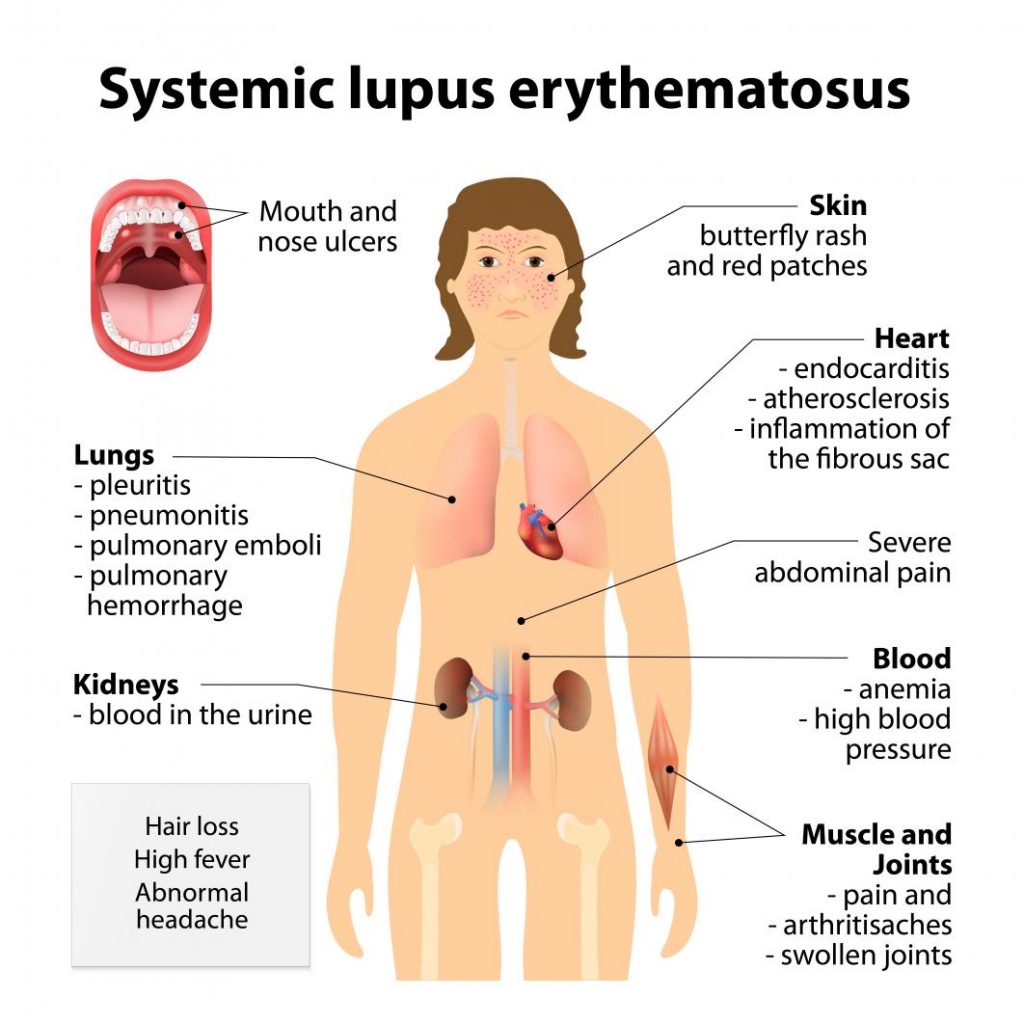
Systemic lupus erythematosus (SLE) is a complex autoimmune disease where healthy cells from connective tissues are mistakenly attacked by a person’s own immune system. SLE is intriguing in that it can attack multiple organs and cause diverse symptoms that are unique in each patient diagnosed. However, since SLE is complex and causes total body symptoms with differing ranges in severity, it is hard for doctors to properly diagnose and potentially treat the disease. The Lupus Foundation of America estimates that there are around 161,000 to 1.5 million documented cases of SLE in the United States alone. This extreme range of documented cases further emphasizes lupus is not properly understood, not properly diagnosed, and lacks a general public understanding of this disease process and how it impacts people. However, celebrities like Selena Gomez who have SLE are openly talking about the disorder and foundations like the Lupus Foundation of America have orchestrated mass events to promote research and awareness. It is critical to develop a deeper understanding and promote research to allow for a proper diagnosis and treatment plan.

What is lupus?

Lupus occurs in patients with overactive immune systems. Lupus has many variations of the disease with the main one being systemic lupus erythematosus (SLE). SLE is the most commonly diagnosed form of lupus because of the number of symptoms associated with the disease. SLE also causes inflammation in organs like the kidneys. Lupus is not contagious and has been linked to both genetic and environmental factors. Lupus has active stages of the disease that are called “lupus flares” and phases of remission. These lupus flares cause the most damage to the body and are what cause symptoms in patients.

Brief video describing what lupus is

How does SLE impact the immune system?

Lupus itself impacts multiple parts of the immune system, including adaptive, complementary, and innate immune responses. Pathways in the immune system that are impaired are ones that control and regulate inflammatory responses like specific Toll-like receptors (proteins in the innate immune system) and cell death (apoptosis) pathways. Once damaged, these pathways cause major immune response reactions, most specifically an immune response called a type III hypersensitivity. This type of hypersensitivity results because of a buildup of antigen-antibody complexes that haven’t been properly destroyed. Phagocytes (cells that ingest harmful foreign particles) are recruited to try and break up this buildup but cannot properly destroy these complexes. Since these cells can’t break up the complexes, a vicious immune response occurs resulting in “lupus flare” ups.

What causes SLE and why is it so hard to diagnose?

SLE is multifaceted and doesn’t have one common risk factor. Research concludes that most patients develop lupus through genetic and environmental factors like having EBV (Epstein-Barr Virus) or being exposed to UV radiation (sun rays). Certain polymorphisms (difference in one amino acid within a gene sequence) like toll-like receptors 7 and 9 (TLR7 & TLR9), cause misregulation of inflammation and promote an inflammatory response. A pathway mutation that occurs is in the cell death pathway (cell apoptosis). In patients with lupus, their healthy cells aren’t killing overmatured B cells (a type of white blood cell that attacks foreign invaders or antigens) which eventually morph into autoantibodies, cells that can’t differentiate between healthy and foreign cells. Lupus requires certain “triggers” from both genetics and other factors that start the onset of the disease.

Lupus is hard to diagnose because each person with the disease is unique. It is often referred to as the “disease of 1000 faces” because each person has different symptoms and different exposures that can trigger symptoms. The combination of genetics, hormones, sex, and environment plays a crucial role in how the disease progresses in each patient and how symptoms are identified.

How is SLE diagnosed and treated?

The American College of Rheumatology uses a standard classification scheme to confirm a diagnosis. A person has to meet at least 4 out of the 11 criteria to obtain a lupus diagnosis. Some criteria include physical symptoms and internal inflammation. A person must have a positive auto-nucleic antibody (ANA) test, which tests for autoantibodies in the body. This ANA test confirms that there is some form of attack on healthy tissue. A doctor will also consider a family history of lupus and environmental triggers like having mono (EBV), radiation, or drugs that could induce symptoms.

A brief overview of the diverse symptoms of lupus

In terms of treatment of lupus, each case is individualized based on the symptoms and current organ damage. The main treatment aims are to prevent and manage flares and reduce the risk of organ damage. Medications like anti-inflammatories are used to reduce inflammation and in extreme cases, chemo may be used to put symptoms into remission. Research is still underway for better, healthier options to treat the disease; including creating new drugs that directly treat lupus and immunotherapy research.

For more information, please see the table of contents below for the different theme pages I have created on what SLE is.

Website Table of Contents

Start Here:

Individual Theme Pages:

  1. A Brief History of Lupus
  2. What is the Healthy Immune System?
  3. Polymorphisms – The Genetic Role
  4. Risk Factors – How Environmental Factors Combined with Genetics Create the Perfect Disease
  5. Diagnosis and treatment
  6. What Now? How do you Challenge a Multifaceted Disease?

Annotated Bibliography

Website Home Page

Reflection Blog 2: What is it that I even want to study

Hey y’all I am back again and this time with a bigger purpose. As I stated in my opening remarks about this blog site, I am curious and passionate about autoimmune diseases and understanding not only the genetic complexities of these diseases but why they are becoming more and more prevalent in society. Autoimmune disorders and immunology are some of the main reasons I want to pursue biochemistry and pharmacy work, in that I am interested to review the pharmacokinetics of drugs in patients with autoimmune diseases. With that being said I have three project ideas in mind that will expand my interests but also will educate and inform people about the unique intricacies and unanswered questions these diseases present in patients. My three project interests are as follows:

1.     I am interested in studying the EBNA1 protein that is only present in Epstein-Barr Virus (EBV) and all Epstein-Barr Virus related malignancies such as EBV induced lupus. EBNA1 can be described as a multifunctional dimeric viral protein that has unique characteristics that make EBV so potent in patients and also has interesting expression in the “Qp promoter region during all latency programs.” This means that the protein is present in all latent cases of EBV and it is the only viral protein expressed in latency programs. While there is a lot of research on EBNA1, there are still a lot of unanswered questions as to why this protein makes EBV so infectious. I want to investigate the proteins genetics and potential infectious mechanisms to understand why it can make EBV such a harmful virus.

2.     There is a lot of research on Multiple Sclerosis (MS) and it is heavily established in the scientific community that it is a metabolic disease. However, there is one unique type of (MS) called Marburg type, or Acute Multiple Sclerosis, that is really not understood as a metabolic disease like the most common form (Relapse-Remitting MS). With Marburg Type MS, it is completely different from RRMS in that symptoms do not relapse and usually causes death within one year of diagnosis. I would be curious to look into the metabolic pathways and biochemical pathways that make Marburg type so deadly compared to RRMS where it has periods of remission and flare-ups.

3.     A final autoimmune disorder I would love to investigate is that of Hashimoto’s Thyroiditis. Hashimoto’s thyroiditis is the most common cause of hypothyroidism in developed countries compared to the rest of the world where the common cause is inadequate dietary intake of iodine. It would be interesting to investigate whether or not there is a link to increased iodine intake in developed countries and the development of Hashimoto’s disorder. I would also like to investigate potential genetic components that make Hashimoto’s so prevalent in developed countries compared to that of non-developed countries.

Each project to me is not only intriguing but also unique like myself. Hopefully with the narrowing down of topics I can develop a deeper respect and understanding for rheumatic illnesses.

The Madness Behind the Science

For those of you who don’t know me, I am obsessed with Alice in Wonderland. I am talking obsessed – I have trinkets of Alice, I freaked out when I met Alice in Disney World, heck I took my nickname Kat after the Cheshire Cat. Lewis Carroll did more than just write a book for his daughter (and possibly give children nightmares of the Queen of Hearts); he opened my eyes to exploring the unknown. I always had an itch for learning about the mechanisms of the world and why I behave the way I do. I was hungry to try the unmarked and unnamed foot palate that was my scientific knowledge and even crazier to know why the Mad Hatter behaved the way he did and how a rabbit could talk (and if I could get both of them to come to my 6th birthday party). Alice in Wonderland, though just a mere children’s book, did so much more to expand my curiosity than I could have ever asked for.

I never knew a part of my life that wasn’t involved in the sciences. My earliest memories of science were when I was about 4 or 5. That being said I had big dreams back in the day that was influenced by my grandparents and my father. My grandpa was an orthopedic surgeon who would talk to me about his residency and the types of surgeries he would do, my grandmother was an ER nurse who loved telling me the ghastly details of trauma in the ER and finally, I had my father who is a petroleum engineer and would show me cool science videos and engineering things he would do. I also grew up in Houston, Texas, which was a hub for science. So I was on the bandwagon with all the other Texas kids of becoming an astronaut and working for NASA one day. Eventually, all of these exposures morphed into one giant passion and I remember telling my parents and kindergarten teacher I wanted to be the first astronaut who was a bone doctor and could study the stars. I would go around learning the constellations and started learning the human body because I was just so intrigued.

However, while my grandfather and my dad influenced my love for the body and engineering, my grandmother was the one who turned me on to actually studying science as a college student. My grandmother Sandy was not only incredibly intelligent, but also emotionally intelligent. She could read a person and their character without even talking to them (which meant I got into a lot more trouble than I should have with my grandparents). She was so intuitive with the human body and a person’s character that her knowledge sometimes surpassed my own grandfather’s (the orthopedic surgeon). She taught me how as a nurse she needed to know patients on a different plane than as a doctor and how she needed to both understand the physical body but also the mind. She talked often about her experiences and showed me how passionate she was about her job. My grandmother was the one who helped me fall in love with biochemistry because of the vast complexities that biochemistry can describe. She taught me to develop a deeper understanding of the brain-body duality and understand that to be a good student you have to acknowledge the physical as well as the internal aspects. With biochemistry, I could not only understand the biological impacts but also the chemical impacts that something has on a human body.

Eventually, my childhood dreams of working for NASA passed and I wanted to follow in my grandfather’s footsteps and become a doctor; specifically a psychiatrist. I wanted to understand the brains of patients but also wanted to treat their diseases. I wanted to understand the drugs that helped the body and the mind. My grandparents encouraged me to go to Muhlenberg because of their strong science majors (Also my grandpa is an alum… go Mules!) and recommended biochemistry and psychology to fulfill my goals. My grandmother, in particular, saw my skills in biology and chemistry and my natural love of science that she said having these majors would be a perfect combination for me to study medicine. I come to find out it is almost impossible to be a psychology and biochemistry double major so I ultimately decided to study biochemistry because I wanted the chemistry knowledge and wanted the experimental background.

My love for biochemistry comes from my own interest in it but my grandmother helped push me to find my love in it. She really opened my eyes to so much about drugs, my body and just following my interests. While my dreams of becoming a psychiatrist are gone (explained later), I still have the same passion for drugs and the mind. Another thing my grandmother helped me fall in love with was my love for reading; especially Alice in Wonderland. I have shaped my life so closely around that book; meaning, I am either bonkers or just passionate. It all came back to the childhood questions of wanting to understand why the Mad Hatter was mad?, what Alice was drinking?, How could she shrink?, Could this even be possible in real life?, What drugs was she taking? Alice in Wonderland shaped my love for sciences in a unique way because I wanted to understand the craziness of life. I wanted to understand the peculiarities in life. My favorite quote ever is “curiouser and curiouser” because I am always curious about something and always have that insanity to learn something new.

Coming back to Biochemistry, throughout my whole life, I would always ask “why this happens” or “how does this occur.” I kept going in science because I genuinely was in love with knowledge behind it and because I can get the how and why answers I have asked. I chose biochemistry because it gave me the biological reasoning on how things worked the way they worked. It was just the right blend of biology and chemistry that made me fit through the door (just like in Alice). I keep going into science because I not only love it but I need to know how things work. I wanted to know why humans were the way they were and what made us good, evil and mediocre. I also wanted to understand why humans think so differently and why people are so unique compared to myself. I wanted the big picture and my hunger was only satiated through studying both biology and chemistry, or the chemical mechanisms behind the biological processes. I could ask the craziest questions on how life works and have them probably answered through biochemistry without a thought. I could ask questions on how drugs worked and how they affect the body/mind. I want the mechanism behind the madness, like from Alice in Wonderland.

As of right now, I want to go to pharmacy school and eventually go for my residency in immunotherapy. This is a fairly new aspiration of mine but I am willing to do anything I can to stick with it. My first 2 years at Muhlenberg were rough. I struggled with grades and my health. I would constantly be getting sick and then when I was healthy I was so tired that I would be falling asleep in class. I went from high school where I was at the top of my class and getting all of these general concepts to struggling to keep up with the homework and barely passing my exams. It was so frustrating and hard for me to comprehend what was going on. I would get so stressed and spend hours studying when I would make the same grades if not worse. I didn’t have the support system I needed and I was drowning in my own anxiety and fears. I finally declared biochemistry and was told I wouldn’t last. I wasn’t smart enough, I didn’t have the skill (again), I was lazy and that I would just be a perpetual failure. When I finally got diagnosed with an autoimmune disorder, it was disappointing and scary, but also a relief. I went from being a lazy student to actually having a disease that impacts the way I study and my health so drastically. I started treatment ASAP and my grades skyrocketed after that.

Because of this weak start, I felt I was at a disadvantage to my scientific peers. Instead of attacking scientific jobs and pursuing research through the traditional route that most science students take at Muhlenberg, I turned to other majors of interest and back into the Allentown community. I picked up psychology research on phonological swear word form preparation in Dr. Frazer’s lab. Dr. Frazer has been a fantastic mentor to me because she has helped me find my footing on how to be a researcher and how to make educated guesses in the lab. She also gave me more of an interest in studying participants and how people react to things instead of just the microscopic level that I was used to studying. She pushed me to look at the bigger picture instead of just focusing on the tiny details that go into an experiment. I fell in love with patient care because of her mentoring. Because of her research lab, I was introduced to Dr. Rudski, who has a background in psychopharmacology and drug therapy in patients. I have been fortunate enough to take a few classes with him including a private research class looking into how opioids are impacting the Allentown community and what opioids do to the brain. With Dr. Rudski’s research method I was able to broaden my interests into the biochemistry behind drugs and why drugs are crucial in certain populations. I started to mold my interest in psychopharmacology but also got back to the original model of why I love science. I fell back in love with my passion when I felt I was thrown out of it.

With all this being said this goes back into why I want to do pharmacy and immunotherapy/psychopharmacology drug research. I love chemistry and biochemistry, I understand the effects certain drugs have on your body personally and I want to make a difference. Certain medications are horrible on the body; meaning I could have severe side effects or develop a flare-up with the medications not doing their job. I want to help people live healthier, stable, and happy lives with autoimmune disorders or certain types of cancer. I want to at least help with drug research and finding drugs that have limited side effects, are minimally invasive, and are incredibly effective in treating the disease, which immunotherapy is a good alternative for. I also want to understand how the brain is impacted by autoimmune disorders. Like for example, Hashimoto’s disease makes a person incredibly tired and fatigued. How is this fatigue impacting their studies or their work? How can we help a person stay mentally cleared and focused? Once again, speaking from personal experience, I know that drugs can clear your head drastically. What medications can I take that will help me keep my mental clarity and focus as it has been? I really hope I can get to this point, and I am going to do everything in my path to get there.

I just want to at least say one day I tried to make a difference.

Introduction to Biochemistry test

This is a test to see if I can follow directions. Hopefully as a second semester senior I can potentially accomplish that… Enjoy a picture of me presenting swear word form preparation at CogSci Montreal.

How does Pyruvate get to work? On its Krebs-cycle

css.php