

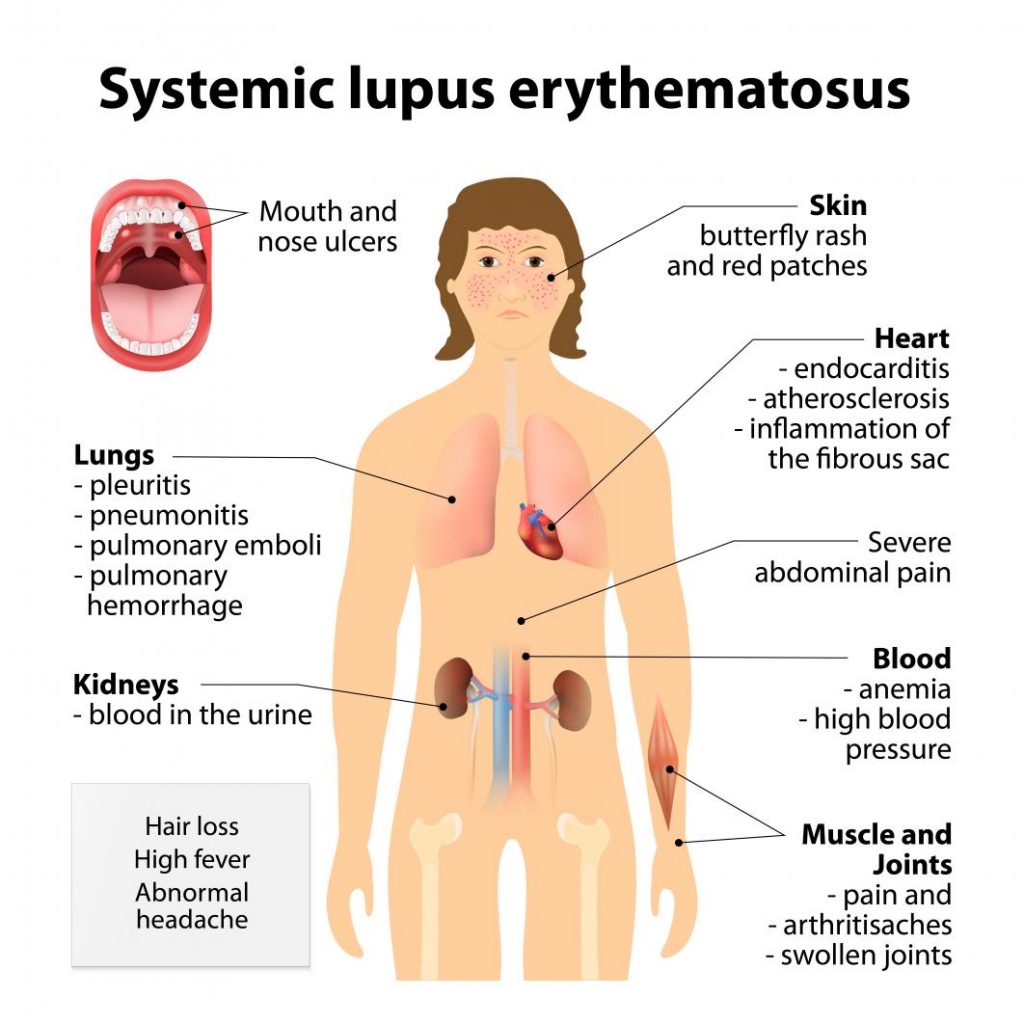
Systemic lupus erythematosus (SLE) is a complex autoimmune disease where healthy cells from connective tissues are mistakenly attacked by a person’s own immune system. SLE is intriguing in that it can attack multiple organs and cause diverse symptoms that are unique in each patient diagnosed. However, since SLE is complex and causes total body symptoms with differing ranges in severity, it is hard for doctors to properly diagnose and potentially treat the disease. The Lupus Foundation of America estimates that there are around 161,000 to 1.5 million documented cases of SLE in the United States alone. This extreme range of documented cases further emphasizes lupus is not properly understood, not properly diagnosed, and lacks a general public understanding of this disease process and how it impacts people. However, celebrities like Selena Gomez who have SLE are openly talking about the disorder and foundations like the Lupus Foundation of America have orchestrated mass events to promote research and awareness. It is critical to develop a deeper understanding and promote research to allow for a proper diagnosis and treatment plan.
What is lupus?
Lupus occurs in patients with overactive immune systems. Lupus has many variations of the disease with the main one being systemic lupus erythematosus (SLE). SLE is the most commonly diagnosed form of lupus because of the number of symptoms associated with the disease. SLE also causes inflammation in organs like the kidneys. Lupus is not contagious and has been linked to both genetic and environmental factors. Lupus has active stages of the disease that are called “lupus flares” and phases of remission. These lupus flares cause the most damage to the body and are what cause symptoms in patients.
How does SLE impact the immune system?
Lupus itself impacts multiple parts of the immune system, including adaptive, complementary, and innate immune responses. Pathways in the immune system that are impaired are ones that control and regulate inflammatory responses like specific Toll-like receptors (proteins in the innate immune system) and cell death (apoptosis) pathways. Once damaged, these pathways cause major immune response reactions, most specifically an immune response called a type III hypersensitivity. This type of hypersensitivity results because of a buildup of antigen-antibody complexes that haven’t been properly destroyed. Phagocytes (cells that ingest harmful foreign particles) are recruited to try and break up this buildup but cannot properly destroy these complexes. Since these cells can’t break up the complexes, a vicious immune response occurs resulting in “lupus flare” ups.
What causes SLE and why is it so hard to diagnose?
SLE is multifaceted and doesn’t have one common risk factor. Research concludes that most patients develop lupus through genetic and environmental factors like having EBV (Epstein-Barr Virus) or being exposed to UV radiation (sun rays). Certain polymorphisms (difference in one amino acid within a gene sequence) like toll-like receptors 7 and 9 (TLR7 & TLR9), cause misregulation of inflammation and promote an inflammatory response. A pathway mutation that occurs is in the cell death pathway (cell apoptosis). In patients with lupus, their healthy cells aren’t killing overmatured B cells (a type of white blood cell that attacks foreign invaders or antigens) which eventually morph into autoantibodies, cells that can’t differentiate between healthy and foreign cells. Lupus requires certain “triggers” from both genetics and other factors that start the onset of the disease.
Lupus is hard to diagnose because each person with the disease is unique. It is often referred to as the “disease of 1000 faces” because each person has different symptoms and different exposures that can trigger symptoms. The combination of genetics, hormones, sex, and environment plays a crucial role in how the disease progresses in each patient and how symptoms are identified.
How is SLE diagnosed and treated?
The American College of Rheumatology uses a standard classification scheme to confirm a diagnosis. A person has to meet at least 4 out of the 11 criteria to obtain a lupus diagnosis. Some criteria include physical symptoms and internal inflammation. A person must have a positive auto-nucleic antibody (ANA) test, which tests for autoantibodies in the body. This ANA test confirms that there is some form of attack on healthy tissue. A doctor will also consider a family history of lupus and environmental triggers like having mono (EBV), radiation, or drugs that could induce symptoms.
In terms of treatment of lupus, each case is individualized based on the symptoms and current organ damage. The main treatment aims are to prevent and manage flares and reduce the risk of organ damage. Medications like anti-inflammatories are used to reduce inflammation and in extreme cases, chemo may be used to put symptoms into remission. Research is still underway for better, healthier options to treat the disease; including creating new drugs that directly treat lupus and immunotherapy research.

For more information, please see the table of contents below for the different theme pages I have created on what SLE is.
Website Table of Contents
Start Here:
Individual Theme Pages:

If you do not catch and diagnose someone with Lupus, what is the time frame for their deterioration and can it result in death? or can late detection still result in success with managing and battling the disease.
Hey Caroline, great question! Unfortunately with lupus if you don’t catch the disease it will ultimately result in symptoms, but the variation and types of symptoms depend on each individual patient. On average it takes around 6 years for patients to get an official “medical lupus” diagnosis so symptoms often go untreated or unnoticed for years (Lupus Foundation of America). With most cases (around 70-80%), once a patient has a diagnosis their health will tend to improve with minimal complications. However, because lupus is really a disease with 1000 faces, a person could have minimal flare-ups and not even notice they have lupus or someone could potentially have total organ failure. I wish I could give you a definitive timeline on this whole disease process but in all honesty, it really does just depend on the patient and how many symptoms are present. Unfortunately like with any complicated disease, if lupus is not treated or misdiagnosed it can lead to death or an increased risk in death due to inflammation complications like severe kidney damage or heart enlargement. The positive with that note however and I stated this earlier is once a patient starts treatment, usually their flare-ups are kept under control. A late diagnosis could just mean more aggressive forms of treatment for the disorder like rounds of chemotherapy or blood transfusions compared to just anti-inflammatory medication or holistic processes.
If you have any other followup questions I totally recommend looking at the Lupus Foundation of America; they really have a great online site on the basic facts on the disease that I may not have covered in this blog! The link is below:
https://www.lupus.org/
Is there any known reason for why lupus occurs women more frequently than men? As well, if a female is affected by lupus and is pregnant, could the auto-immune system/flare ups affect the development of the fetus?
Hey, Jermaine also really cool question. Yeah, there are a few suggestions as to why this happens. For starters, it has to do with estrogen and hormone production. There have been a lot of research articles on how higher levels of estrogen production can lead to increased risk of autoimmune disorders like SLE, RA and MS. This has to do with estrogen playing a role in the immune response and the formation, activation, and production of helper T cells (cells that help pathogenic objects in a cells’ body). Estrogen receptors also play a role in the innate immune response and how we fight off certain infections – check out the link below, this was the main article that published how estrogen plays a role in autoimmune disorders:
https://stke.sciencemag.org/content/11/526/eaap9415
If a female is affected by lupus and is pregnant a number of things could happen. Best case scenario, nothing happens; the woman and baby are healthy and flare-ups are put in remission. However, there is a worst-case scenario in which lupus flare-ups could increase the development of blood clots and increase the risk of miscarriage or health effects like preeclampsia. But this is less likely, as the CDC states most women with lupus go on to have healthy pregnancies. Another problem (and this is incredibly uncommon) is the fetus developing what is called neonatal lupus; another variant of lupus that presents symptoms at birth and tends to go away after a couple of months. Not much is known about it as it only affects 1% of births from lupus patients, but it has to do with blood compatibility to my understanding. Babies with neonatal lupus could have severe symptoms like liver failure or mild superficial symptoms; but, all babies with this lupus variant are born with skin lesions that are associated with the disease. The plus side with this is that because neonatal lupus is blood-related, women can get tested for it and start a treatment plan to help ensure their baby is the healthiest they can be during this disease process.
Is there any exercise recommendation/guidelines for someone who has lupus? It has shown in research that exercise has anti-inflammatory properties. Could this help in reducing possible symptoms so that people do not have to rely on anti-inflammatory drugs?
Hey, another great question Jermaine! Yes yes, 100% yes there are so many types of exercises that can help with inflammation!! For exercising, it once again depends on the patient and how severe their symptoms are; but usually, patients with lupus are encouraged and advised to be active and workout. This can include activities that are less intense on joints and less harsh on the body like swimming, yoga, bicycling, low-impact aerobics, walking, and pilates. These activities help with blood flow, decrease inflammation, and are not as intense on the body like lifting weights or running that could cause joint pain and muscle damage.
To answer your second question yes!! There have been a few research articles on how exercise and staying active as a lupus patient help stimulate a healthy immune response. While exercise alone may not stop a person from taking anti-inflammatory drugs altogether, they can help with reducing the dosage and intake of these medications. There are also a lot of research articles on how exercise helps with mental health. Patients with lupus have an increased risk of depression and other mental disorders so oxygen to the brain and stimulation from these workouts can really help a patient with coping. I really think you should look into the Lupus Foundation of America as well! They have great articles on how people with lupus exercise and why these exercises are better for joint control.
https://www.lupus.org/resources/exercising-with-lupus
Awesome write-up, Kat! SLE can be tricky to recognize in patients since lupus can basically “do what it wants” and manifest in different ways in different people. Do you think this significantly contributes to it being difficult to diagnose? Anti-dsDNA antibody tests are very specific and are positive in about 70 percent of patients who have SLE, so it seems like the problem with being able to diagnose it has more to do with recognizing the clinical findings and knowing when to order the test rather than the tests themselves. Thanks!
Hey thank you Brandon, you are absolutely right! This is kind of a monster of a disease and a pain in the ass to treat.
With referring to your questions yes I completely agree that since lupus “does what it wants” it makes it so much harder to treat. I mentioned in an earlier comment that it takes on average 6 years for a patient to get a proper medical diagnosis for lupus, which just shows how crazy ridiculous these symptoms can vary in patients and how doctors also don’t have a control on identifying emerging symptoms. Also exactly what you said, anti-dsDNA antibody tests are very specific and do present in 70 percent of patients who have SLE; however, most doctors require a positive Anti-dsDNA test in order to give a “lupus” diagnosis (also recent studies have shown that now over 90% of SLE patients have this positive antibody test). This is because in any autoimmune disorder you will produce these auto-reactive antibodies. If a patient doesn’t have them, then either they are in remission for SLE flare-ups or have another diagnosis that isn’t autoimmune related. There are also now more specific blood and urine tests that can be run to determine if a patient has lupus. This can include anti-dsDNA testing, Rheumatoid arthritis testing (high correlation of patients with SLE test positive for RA or have RA), Russell viper venom time testing (used to test for lupus anticoagulants in the blood), erythrocyte sedimentation rate (tests for general inflammation in the body), protein count in urine (shows kidney inflammation; common with lupus patients) and neutrophile count in the urine. These tests really are the definitive answer for doctors on what exactly they are dealing with and if a patient has lupus.
I think the biggest thing that makes lupus so hard to diagnose is exactly how you worded it; it “does what it wants.” Patients can come in with internal symptoms like mental fog, depression, chronic full-body fatigue, and sun sensitivity that may not be enough for a doctor to clinically diagnosis from just those symptoms. Unfortunately, only people who really understand the disease, have prominent symptoms present, or a family history of SLE get an early diagnosis from doctors and early treatment plans. Another issue is that most general practitioners and internists don’t study or understand the disease fully so patients are often not treated correctly or even don’t address their symptoms until they have severe symptoms. Specialized doctors like rheumatologists really fully understand symptoms and generally make the SLE diagnosis for patients (usually around 95% of patients get a diagnosis from a rheumatologist); however, there is a shortage of rheumatologists so obtaining an appointment makes it that much harder for patients dealing with untreated symptoms.
So to sum up your question, it is a culmination of both having too diverse physical symptoms to meet medical criteria and doctors not understanding symptoms properly to investigate further. Doctors heavily rely on these blood and urine tests because they quantify and calculate what they cannot understand or see in patients who are presenting symptoms. I’ve attached some great articles below that discuss even further what these tests are and a great research article on how often lupus is misdiagnosed and undertreated (hint 46.5% were found to be misdiagnosed!!):
https://www.hopkinslupus.org/lupus-info/diagnosing-lupus/
https://acrabstracts.org/abstract/lupus-diagnosis-process-and-patient-experience/
Fantastic job, Kat! I admire your willingness to research something that is complicated both on a personal level and physiologically– researching something with such different manifestations in each patient. My question for you is on your healthy state page, where you describe different typical anti-inflammatory signaling (I’m remembering TLR pathways and JAK signaling specifically). I’m remembering our discussion on PUFAs and the anti-inflammatory effects of omega-3’s, so is there any way that diet can be used to mitigate some of the inflammatory problems associated with SLE? I’m not trying to suggest this as a “cure,” but have you come across any literature on how diet or other behavioral changes (another comment mentions exercise) in patients can perhaps aid in managing SLE?
Thank you, Em! This project was a lot to tackle but totally worth it for better understanding this whole disease process. It gives me a better understanding on how to advocate for it and how I can educate others!
And great way to tie this in back with lectures from class. To sum it up 100% yes!!! You’re correct in that diet isn’t necessarily a “cure,” but there have been numerous articles on how specific diet plans and avoiding certain foods can help with reducing symptoms and lupus flare-ups. So if you remember from class, you really want an omega-3 heavy diet to help promote anti-inflammatory properties and avoid omega-6 because that promotes inflammation. Most people get omega-3 from fish and other products like this, so a big diet plan for lupus patients and a lot of patients with autoimmune disorders is the use of the Meditteranean Diet. This diet plan is a way of eating based on the traditional cuisine of countries bordering the Mediterranean Sea like Greece or Italy and typically is high in vegetables, fruits, whole grains, beans, nut and seeds, fish, and olive oil. It is also plant-based/heavy and not meat-heavy as meats tend to promote inflammation. In fact, this diet plan is recommended by the CDC and WHO as a great way to promote healthy heart living and help control chronic diseases like lupus. Another diet plan is the Keto diet. This is more of an extreme diet plan but it also focuses on cutting out high sugars and promotes the intake of proteins (low carb intake, high fat intake). The whole point of this diet is to create this “ketosis” phase where people are relying solely on ketones and fat for energy. This is another great way for people to have reduced sugar intake and get these omega-3 acids while reducing any additional proinflammatory responses that could trigger these TLR and JAK signaling pathways! This also helps with reducing omega-6 buildup and causing this downstream regulation of inflammation buildup which could impact the TLR pathways and JAK signaling pathways as mentioned above. Omega-6 has a negative correlation with creating and inducing flare-ups which triggers these pathways to malfunction, causing this downstream effect of chronic inflammation and type III hypersensitivity. This results in the lupus flare-up and damage to cells.
There also are a lot of articles on how specific foods impact lupus patients. So foods like garlic and alfalfa have joene, thiosulfinates, and allicin which are pro-inflammatory compounds that could trigger lupus flare-ups. There are also specific dietary restrictions like reducing sugar intake, gluten intake, hard alcohol intake and reducing red meat intake that is encouraged by health officials to observe in lupus patients because these can cause symptoms and flare-ups.
To finish with your comments I think a combination of proper exercise, proper dieting, and food awareness like with what omega-6 and what these PUFAs even are can help with not only mental health but physical health. Flare-ups affect every patient differently and I mentioned in a previous comment that patients with lupus have an increased chance for developing depression; so the general trend is the healthier you feel about your body the happier you are and more energized you are. 🙂
If you want to review more I’m linking a few great sites on fatty acid intake and lupus health below!
https://www.ncbi.nlm.nih.gov/pmc/articles/PMC6776881/
https://www.sciencedirect.com/science/article/pii/S2255502114001515
Hey, I really liked your blog, Kat! As someone who doesn’t understand lupus but knows the general concept of the disease, this write-up helped me with developing a deeper sense of how diverse lupus actually is. I do have a couple of questions for you. I first want to ask about how people with lupus deal with chronic inflammation and the physical symptoms that present and what types of physical therapy and exercise that can come from it. There is a lot of research that inflammation is greatest in the morning and that performing certain exercises can help with reducing these symptoms; so how could a patient combat this.
Another question I had was how lupus chemically affects the brain. There is a lot of research on how lupus manifests systemically including psychiatric effects and other neurological symptoms. You also discussed in your healthy pages how TLR pathways are mutated and different anti-inflammatory signaling are impacted. What specific pathways are involved in the brain that could cause these psychiatric effects like bipolar disorder and depression? Also with chronic inflammation and the potential for similar pathways to be involved in neurodegenerative diseases, can lupus cause other neurological disorders like Alzheimer’s disorder or Parkinson’s disorder?
Hey so great comments! For starters, you are correct! There is a correlation with more inflammation in the morning compared to other parts of the day; this is because of a lack of movement of your joints while sleeping. Lack of movement can cause fluid buildup in joints and cause this stiffness and inflammation that you see. Hence why there is a strong link between staying active and the reduction of inflammation (more movement helps with stopping this fluid buildup). Specifically for inflammation in the morning, a lot of the time patients can elevate their feet to help reduce fluid buildup while they sleep. Also just moving their bodies after waking up can help. Another thing is urinating (odd but works); urinating helps remove these inflammatory properties which could help reduce this fluid buildup. This is also why a lot of lupus patients are given diuretics to help remove this excess fluid.
You have fantastic questions about lupus and central nervous system damage. So from my current understanding, the same inflammatory pathways are affected in the brain and cell death pathways are impacted. However, this doesn’t mean that there are other cell pathways that impact neurological disorders in patients with SLE; whether it be from lack of research or general misunderstanding there is not a lot of information out there about how lupus pathologically impacts the brain and CNS. As you stated, what makes lupus so horrifically cool is that it can manifest into neurological disorders like depression; however, a common misconception is that lupus causes bipolar disorder or that bipolar disorder is a symptom of lupus. Lupus itself doesn’t manifest into this disease, it merely eerily mimics symptoms, and treatments of the diseases are somewhat similar. Patients also often talk about a “mental fog” that hangs over them when they have flare-ups or doing intense work. While these pathways impact general inflammation, usually a combination of hormonal dysregulation (increased levels of estrogen really impact the CNS), vascular inflammation and specific drugs cause these neurological symptoms.
Finally, with your last question, that is a really really interesting topic. With recent research conducted from the University of Oxford, there only seemed to be a slight increase in the chance of an SLE patient developing Alzheimer’s. There was, however, a 46% increased chance of developing dementia and vascular dementia in a patient with SLE. I think this correlation has to do with SLE just attacking neurons and causing general neuron damage while Alzheimer’s and Parkinson’s have more specific neurological damage. I would say from research conducted that, yes, lupus could potentially cause neurological disorders like Alzheimer’s; however, I don’t think that lupus is correlated to Parkinson’s or other types of neurodegenerative diseases like this.
I have linked 2 articles that discuss neurological damage in detail in patients with SLE and what research has been conducted on it.
https://www.verywellmind.com/lupus-bipolar-disorder-379967
https://www.rheumatologyadvisor.com/home/lupus-among-autoimmune-diseases-tied-to-subsequent-dementia-risk/